Behind every organization there is a story.
Some are born from a sudden insight, while others take shape slowly, through experiences that
change the way we see the world.
Behind Dignity Advocates there is the conviction that lasting change begins by restoring human
dignity.
“Lasting change requires more than charity. It requires restoring dignity.”
From Experience to Vision
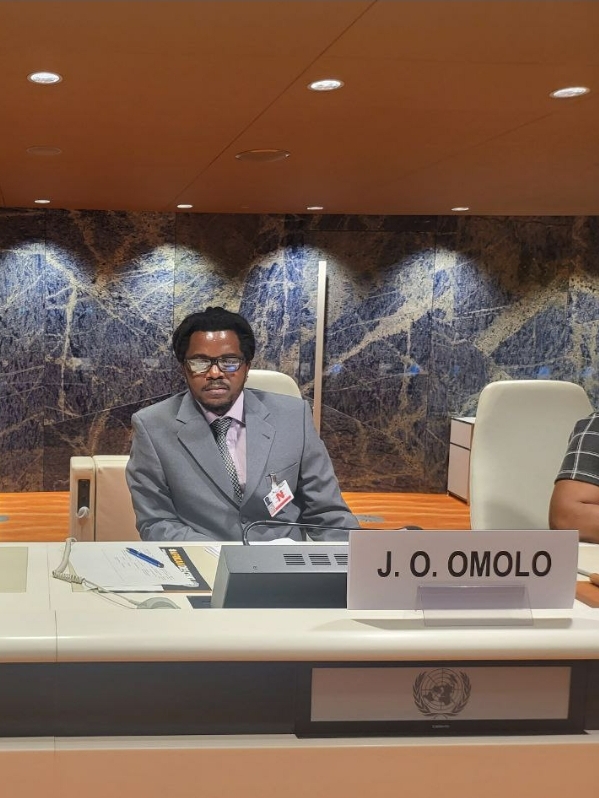
The story of Dignity Advocates began long before its official establishment. During the years he
spent working with vulnerable communities in Kenya and collaborating with civil society
organisations across Europe, James Omolo witnessed how poverty, social exclusion, and the lack of
access to mental health services could deprive people not only of opportunities, but also of their
dignity, respect, inclusion, and hope.
From this awareness, the idea of creating an organisation capable of placing human dignity at the
centre of its work slowly began to take shape. Over time, that idea would eventually become
Dignity Advocates.
To learn more about the journey that led to the birth of Dignity Advocates, the vision that continues
to guide its work today, and the meaning that the word “dignity” holds for its founder, we
interviewed James Omolo. To truly understand its story, we need to go back a few years.
One of the experiences that contributed most to shaping the vision of Dignity Advocates dates back
to 2022, when James was part of a team training human rights trainers from civil society
organisations based in Kenya.
During those visits, he witnessed something he could never forget: dozens of children wandering
the streets during school hours instead of being in the classroom.
When he asked why, he discovered that many families could not afford to send their children to
school. Others were affected by domestic violence, abandonment, and extreme poverty.
That experience did not immediately lead to the birth of Dignity Advocates. It first led to a choice:
to listen.
From that journey of listening, Dignity Advocates took shape in 2024: a non-profit organisation
committed to restoring hope, protecting human dignity, and promoting social inclusion through the
protection of human rights, mental health, education, advocacy, and community empowerment.
For James, every person should have the opportunity to live with dignity, regardless of their
circumstances.
Listening Before Acting
One of the experiences that has stayed with James the most, he tells us, was meeting young people
living in informal settlements who were suffering from untreated mental health conditions. Many
had enormous potential, yet they had nowhere to seek help and were often stigmatised by their
families and communities.
Even before imagining what would become the first major project, James and his collaborators
decided to begin by listening to the community. They spent a great deal of time speaking with
parents, teachers, healthcare professionals, youth leaders, and local organisations. Their work did
not begin by imposing solutions from the outside, but by building trust and genuine partnerships.
It was through that journey of listening that James developed a conviction that would become the
foundation of Dignity Advocates: lasting change requires more than charity. It requires restoring
dignity.
From Listening to Action
Those conversations helped shape what, in 2025, would become the first major public initiative of
Dignity Advocates: the project to establish a mental health centre for children in Kibera.
“Many people in Kibera suffer in silence because services are insufficient, professionals are few,
and stigma prevents many from seeking help. Improving mental health is not only about treating
illness; it is about enabling people to participate fully in society and realise their potential.”
The mental health centre project for children in Kibera represents a cornerstone of Dignity
Advocates’ mission. Through this project, Dignity Advocates aims to create a safe space where
children and families can receive psychological support, counselling, educational services, and
referrals to specialised care whenever necessary.
However, the vision of Dignity Advocates goes beyond the construction of a single building. The
project is intended to be the first step towards a broader model of care, training, research,
awareness-raising, and community development that can be replicated in other parts of Kenya.
It is precisely this perspective that distinguishes Dignity Advocates: the centre represents the
starting point of a broader vision, founded on dignity, inclusion, and the direct involvement of
communities.
The Moment James Knew He Was on the Right Path
Asked what moment made him realise he was on the right path, James does not mention an award.
He does not speak about funding.
He does not recall any recognition.
He remembers a mother.
“During our community needs assessment workshops in Kibera, the mother of a child with a
developmental disability told me that, for the first time, she no longer felt alone.
Meeting other parents who were going through similar experiences gave her the courage to support
her son and, later, to encourage other families to do the same.
Seeing someone move from isolation to becoming a source of support for others was one of the
most moving moments of my journey. It reminded me that lasting change begins when people
realise they are not alone.”
This is the idea of change that has guided Dignity Advocates since its very beginning: building
communities where no one has to face mental illness, poverty, or social exclusion alone. It is from
this conviction that the work of Dignity Advocates continues to this day.
Interview conducted by Asma Louki
